Landscape Design Nebraska
Home > Landscape Design
Creating Outdoor Spaces That Actually Work Here
Most landscape design Nebraska homeowners see in magazines doesn’t work here. Those perfect gardens with constant blooms? They need weather we don’t have. That lush grass everywhere? Good luck keeping it alive through July and August without drowning it in water we can’t spare.
I watched my neighbor in Aksarben Village hire three different landscapers over two years. Each one planted stuff that looked amazing for about six weeks, then died. She finally found someone who actually understands Nebraska – what survives our winters, what doesn’t need constant watering, what the deer won’t eat overnight. Her yard finally looks good year-round now instead of just spring.
That’s what real landscape design Nebraska style means. Working with what we’ve got instead of fighting it.
What Works in Nebraska's Climate
Nebraska throws everything at your yard. We get minus 20 in winter. We get 105 in summer. We go months without rain then get three inches in one afternoon. Spring freezes kill early bloomers. Late frosts ruin fall plantings.
Landscape design Nebraska professionals actually know how to handle needs plants that can take all that abuse. Native grasses that go dormant when it’s dry instead of just dying. Shrubs that survive ice storms. Trees that won’t snap in half during straight-line winds like we get every summer.
In Lincoln and Omaha, the soil is different depending on what part of town your in. Some areas have clay that holds water. Others have sandy soil that drains too fast. Good landscape design figures that out before planting anything. Otherwise you end up with plants drowning in one spot and dying of thirst ten feet away.
The landscape design Nebraska companies who’ve been around more than five years know which plants actually make it. They’ve seen what survives and what doesn’t. That experience is worth more than any pretty picture in a magazine.
Shade Tolerant Turf: Solving the Tree Problem
Everyone wants big trees for shade. Then they want nice grass under those trees. Those two things don’t usually work together. Regular grass needs sun. Trees block sun. You end up with bare dirt and tree roots under every tree by mid-summer.
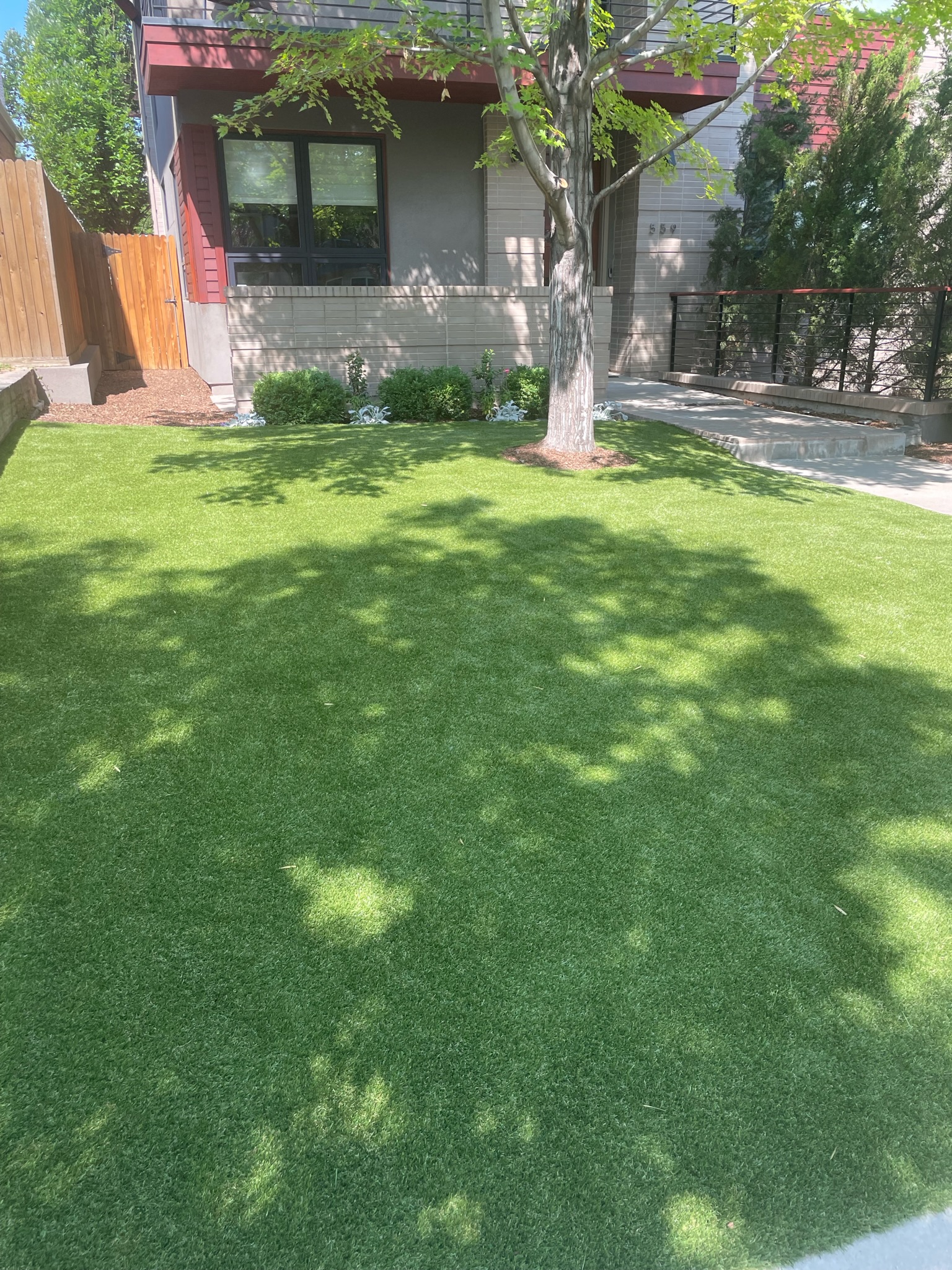
Shade tolerant turf is one answer that’s catching on in neighborhoods like Dundee and Country Club. It’s engineered to stay green in areas that only get a few hours of filtered sunlight. No more dirt patches under your oak trees. No more constant reseeding that never takes.
My cousin in Bellevue has huge maples shading most of his backyard. Regular grass never worked there no matter what he tried. He installed shade tolerant turf two years ago and finally has a useable yard instead of a mud pit under trees. The kids can play back there now without destroying what little grass tried to grow.
For landscape design Nebraska homeowners request most, dealing with shade is near the top. Nobody wants to cut down their trees just to have grass. Shade tolerant turf lets you keep both. It works under decks too, which is handy for that space under elevated decks that’s always dark and gross.
The installation is similar to regular artificial turf. Remove the sad excuses for grass that’s struggling in shade. Prep the base. Install turf designed for low-light areas. Then your done fighting that losing battle.
Xeriscapes: Designing for Our Dry Reality
Xeriscape is just a fancy word for landscaping that doesn’t need much water. That should be the default for Nebraska but most people still try to grow water-hungry plants that belong in Oregon or somewhere wet.
Xeriscapes use native plants, rocks, mulch, and smart design to look good without irrigation systems running constantly. Ornamental grasses. Sedums. Black-eyed Susans. Coneflowers. Stuff that’s supposed to be here and knows how to handle drought.
West Omaha developments are starting to require more xeriscape designs because the city can’t support everyone watering giant lawns during droughts. That’s actually a good thing because it forces better landscape design Nebraska climate can support long-term.
A good xeriscape doesn’t look like a desert rock garden. It looks planned and intentional. Different textures and heights. Colors that change with seasons. Sitting areas that make sense. It’s just designed around the reality that we don’t get enough rain to support thirsty plants.
The water savings are real too. Homeowners in Papillion who switched to xeriscape front yards report their summer water bills dropped by half or more. That’s hundreds of dollars per year just on water. Over time that pays for the landscape design work.
Plus during water restrictions you don’t have to watch your landscape die. Xeriscapes are designed for exactly those conditions. Dry spells don’t phase them because they’re built for it.
Eco Friendly Lawns: Beyond Just Grass
The old idea of lawn care in Nebraska was constant mowing, watering, fertilizing, and still ending up with a yard that looked rough half the year. That’s not what homeowners want anymore. They want an eco friendly lawn that looks great without eating up their weekends and water bill.
Synthetic grass is one of the most practical eco friendly lawn options available today. No mowing. No watering. No fertilizer. No pesticides. You get a yard that stays green and even whether it’s July in Omaha or February in Lincoln — without doing a single thing to maintain it.
Synthetic grass also makes serious sense during Nebraska’s dry summers. When August heat hits and water restrictions kick in across Omaha, Lincoln, and surrounding cities, natural grass turns brown fast. An eco friendly lawn built with synthetic grass doesn’t care. It looks exactly the same in a drought as it does in a wet spring. You’re not wasting water trying to keep up appearances.
The practical side is straightforward. You pay for the installation once. After that, your main maintenance is occasionally rinsing off the surface and brushing the fibers back up if they get flattened in a high-traffic area. That’s it. No equipment to store, no chemicals to buy, no Saturday mornings pushing a mower in the heat.
The result is an eco friendly lawn that costs less to maintain over time, uses no water to stay green, and gives you that time back. It looks sharp all year. It holds up to kids, dogs, and heavy foot traffic without wearing down to dirt. And you’re not pumping anything into the ground or the watershed to keep it that way.
(308) 380-6588
Get a free estimate today.
Turning Wasted Space Into Something Useful
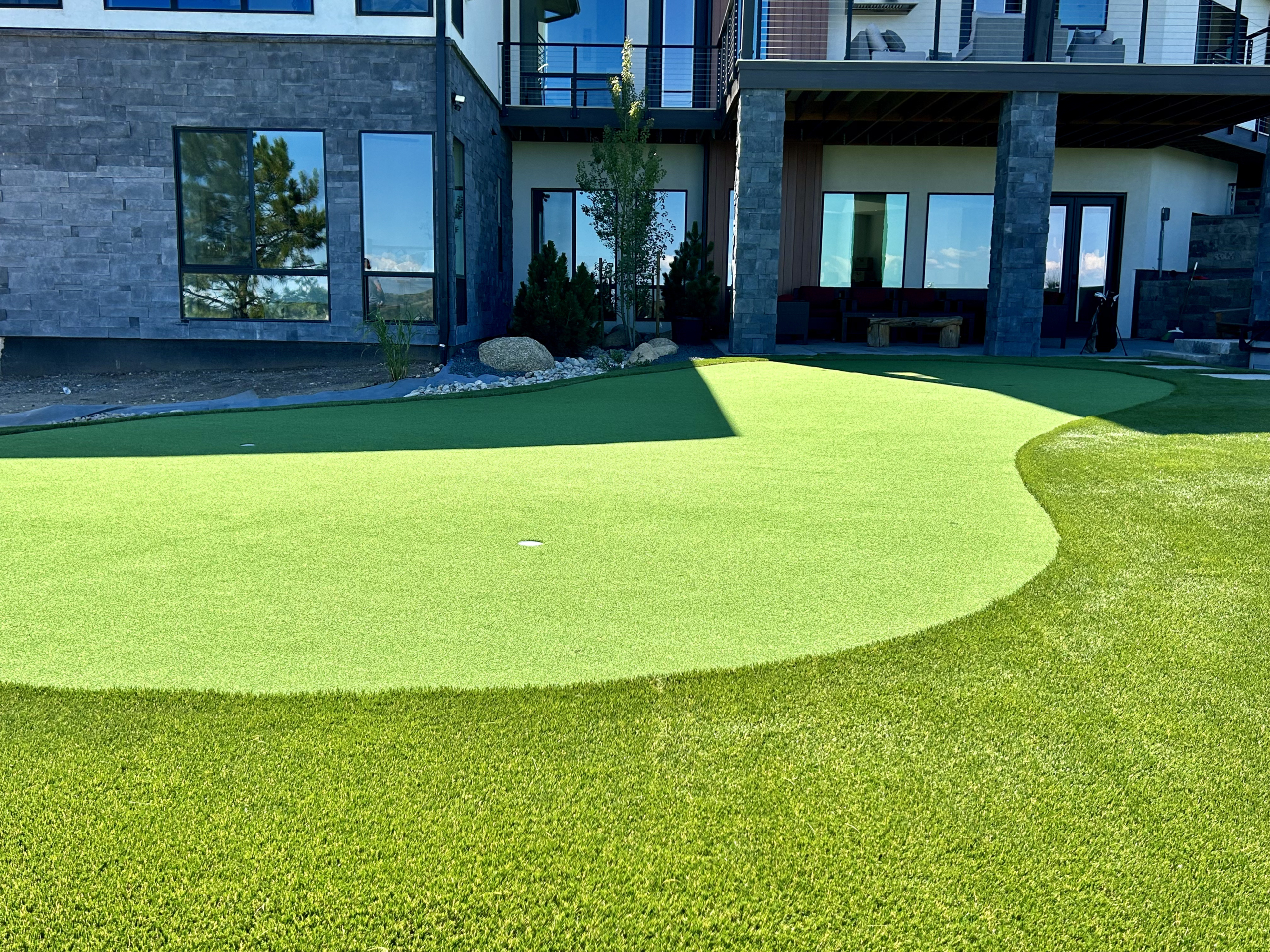
Most Nebraska backyards are just… there. Some grass that’s half dead by August. A muddy patch where the dog runs. Bare dirt under the swing set. Nothing you actually want to spend time in. That’s wasted space that could be working a lot harder for your home and your family.
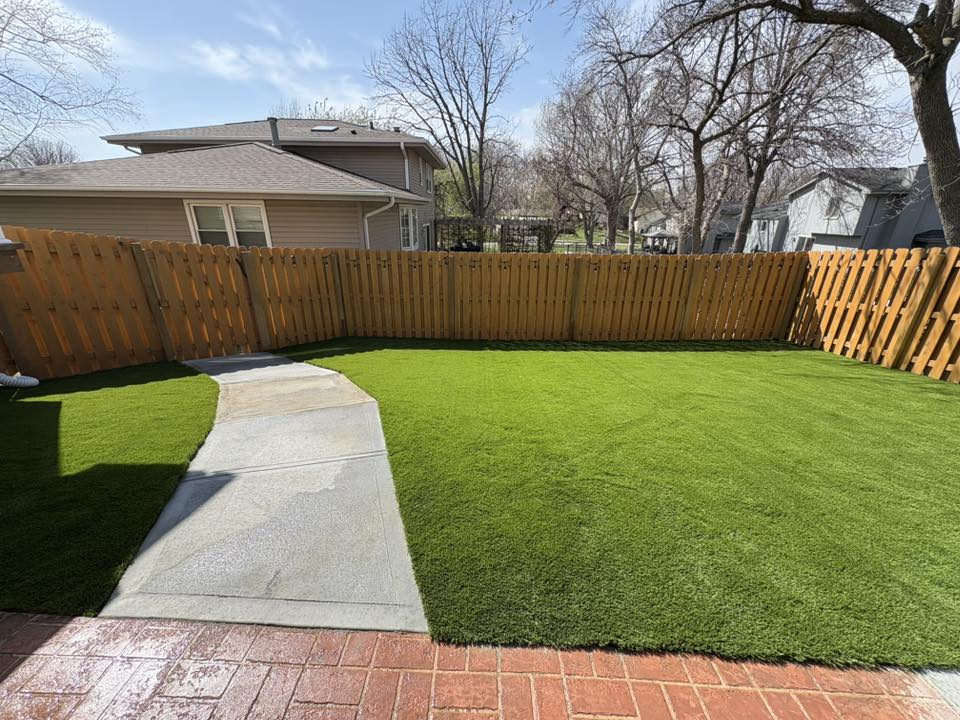
Residential artificial turf turns that wasted space into something you actually use. A backyard that looks green and clean year-round without you doing anything to maintain it. No mowing on hot Saturday mornings. No brown patches in drought. No mud tracked through the house every time it rains. Just a good-looking, functional yard that holds up to real life.
In the Village Gardens area in Lincoln, homeowners are choosing residential artificial turf because it makes yards look sharp and stay usable. When every square foot matters, you can’t afford to lose half your yard to dead grass or bare dirt. Synthetic turf keeps the whole space looking intentional and clean, which makes all yards feel bigger and more put-together.
Omaha neighborhoods like Blackstone and Benson have older homes with decent-sized yards that nobody uses because the grass is a constant battle. Heavy shade from mature trees. Clay soil that drains poorly. High-traffic areas that wear down to dirt no matter how much you reseed. Residential artificial turf solves all of that in one installation. It doesn’t need sun. It doesn’t care about soil. It handles foot traffic from kids, dogs, and backyard gatherings without showing wear.
The install process starts with your yard’s specific conditions. Slope, drainage, how the space gets used, what’s going on with the soil underneath. Residential artificial turf done right isn’t just rolled out on top of whatever’s there — it’s built on a proper base so it drains well, sits flat, and lasts for years without shifting or developing low spots.
Dealing With Nebraska's Soil Issues
Nebraska soil is genuinely difficult to work with. Heavy clay in eastern parts of the state that holds water and drowns roots. Sandy soil out west that dries out fast and won’t hold nutrients. Compacted subsoil in new developments around Elkhorn and Gretna where builders scraped off the topsoil and left homeowners with ground that barely grows anything. One of the biggest advantages of synthetic grass is that none of that matters anymore.
Natural grass is completely dependent on what’s underneath it. Bad soil means bad grass, no matter how much you water, fertilize, or reseed. You’re constantly fighting the ground itself. Synthetic grass sits on a properly installed base layer that’s built for drainage and stability — not dependent on your native soil doing something it probably can’t. Whether you’ve got clay, sand, or compacted construction fill underneath, the turf performs the same way.
Drainage is where this advantage really shows up in everyday life. Clay soil in areas around Omaha and Lincoln can hold standing water for days after a heavy rain. That means soggy yards, muddy dogs, and kids stuck inside. A synthetic grass installation includes a crushed aggregate base that moves water through quickly and efficiently. Rain drains down through the turf and out through the base instead of pooling on the surface or saturating the ground. Your yard is usable the same day it rains.
The other big advantage is consistency. Natural grass in Nebraska looks different every season — green in spring, stressed and brown in August, dormant and dead-looking by November. Synthetic grass looks the same in every season and every weather condition. That consistency isn’t just about appearances. It means a stable, even surface year-round that doesn’t develop ruts, bare patches, or soft spots that twist ankles and trip kids.
Most homeowners don’t realize how much time and money goes into fighting poor soil conditions until they add it all up — the bags of amendments, the replacement plants, the reseeding, the irrigation. Synthetic grass eliminates that cycle completely. You fix the problem once with a proper installation, and then you’re done. No more throwing money at a yard that keeps fighting back.
Seasonal Considerations for Year-Round Interest
A yard that only looks good in June is a fail. Landscape design Nebraska homeowners appreciate works across all seasons. Spring blooms. Summer green. Fall colors. Winter structure.
Spring in Nebraska is tricky because late freezes kill early bloomers. Landscape design plans for that with later-blooming natives that wait until danger passes. Serviceberry. Redbud. Native plums that know when it’s actually safe.
Summer is about surviving heat and possible drought. The landscape needs plants that can handle it without constant watering. Ornamental grasses. Sedums. Russian sage. Stuff that looks good even when it’s 100 degrees and hasn’t rained in weeks.
Fall can be amazing here if you plan for it. Maples turning red. Sumac going orange. Native grasses turning gold. Asters blooming purple when everything else is done. The landscape design should include plants that give you that fall show.
Winter is dead time for most yards. But good design includes evergreens for structure. Ornamental grasses that look good with snow on them. Tree bark that’s interesting. Bird feeders and baths that bring life when everything’s dormant. Your yard shouldn’t just die for four months.
What Good Design Actually Costs
Nebraska homeowners worry about cost, which is fair. Professional design isn’t cheap upfront. But it’s cheaper than redoing your yard three times because you didn’t plan right the first time.
Design fees vary depending on project size and complexity. Small yards might be a few hundred dollars. Larger properties with complex grading and multiple features cost more. But that upfront design saves money on plants that die, hardscaping that fails, and drainage problems that destroy everything.
The design process includes site analysis, concept drawings, plant selection, hardscape plans, and installation oversight. You end up with a plan that actually works instead of guessing and hoping.
DIY landscape design is possible if you do your homework. Learn what grows here. Understand your soil and sun patterns. Plan drainage. Choose appropriate plants. But most people don’t have time for all that research and end up making expensive mistakes.
Professional landscape design Nebraska companies also handle permits if needed, coordinate with contractors, and know local suppliers. That knowledge and those connections save time and headaches during installation.
Making Your Landscape Last
Installation is just the beginning. Landscapes need maintenance to stay looking good. But good design minimizes how much work that takes.
Native plants need less babying than exotic ones. Proper mulching reduces weeding and watering. Smart irrigation systems water efficiently instead of wastefully. Hardscaping that’s built right doesn’t need constant repairs.
Year one after installation needs the most attention. New plants establishing roots. Mulch settling. Adjustments based on what’s actually happening. After that it should get easier if the design was sound.
Many landscape design Nebraska companies offer maintenance packages. They come seasonally to prune, mulch, adjust, and keep things on track. That’s worth considering if you don’t have time or knowledge to maintain properly.
The goal is a landscape that gets better with age instead of falling apart. Trees that grow into their space. Perennials that fill in and naturalize. Hardscaping that weathers well. That only happens with good design and decent maintenance.
Contact us for a free estimate today.
Our number
(308) 380-6588
Our Email
info@progameturfrec.com
Our location
Omaha, Nebraska