Sports Fields Artificial Turf Nebraska
Home > Sports Fields
Artificial Turf Installation Built for the Midwest
If you manage a sports field in Nebraska, you already know how much the weather works against you. Spring rains turn infields into mud. Summer heat burns out the grass. By fall, you’ve got bare patches, uneven ground, and a field that looks bad and plays worse. Sports fields in Nebraska need to hold up through all of it — and that’s where professional artificial turf installation makes a real difference.
We install synthetic turf on sports fields all across Nebraska, from Omaha and Lincoln to Grand Island, Kearney, Norfolk, Hastings, and smaller towns in between. Whether you’re running a school athletic program, managing a city rec department, or building out a private sports facility, we can put in a field that handles Nebraska weather without the constant upkeep that natural grass demands.
Three main types of sports fields we install most in Nebraska: baseball fields, football fields, and putting greens. Each one has different needs, and we build each one to match both the sport and the site.

Why Nebraska Sports Fields Need Artificial Turf
Natural grass sounds great on paper. But anyone who’s tried to maintain a sports field in Nebraska knows it’s a constant battle. The clay-heavy soils in a lot of eastern Nebraska don’t drain well. The sandy soils out west dry out fast and get hard. And the wind? It’s always a factor.
Here’s what we hear from Nebraska athletic directors, parks staff, and facility managers all the time:
- “We had to cancel three home games this spring because the field was unplayable.”
- “We’re spending more on field maintenance than we budgeted for the whole season.”
- “The kids practice on concrete-hard ground in August and soup in April.”
Artificial turf for sports fields in Nebraska fixes all of that. A well-installed synthetic field drains fast, handles heavy use, and stays consistent from March through November. You’re not waiting for grass to recover between games. You’re not canceling events. You’re just playing.
And the maintenance savings are real. No mowing. No overseeding. No irrigation costs. No field paint every other week. For a lot of Nebraska schools and parks departments, the turf pays for itself within a few years through reduced upkeep alone.
Putting Greens
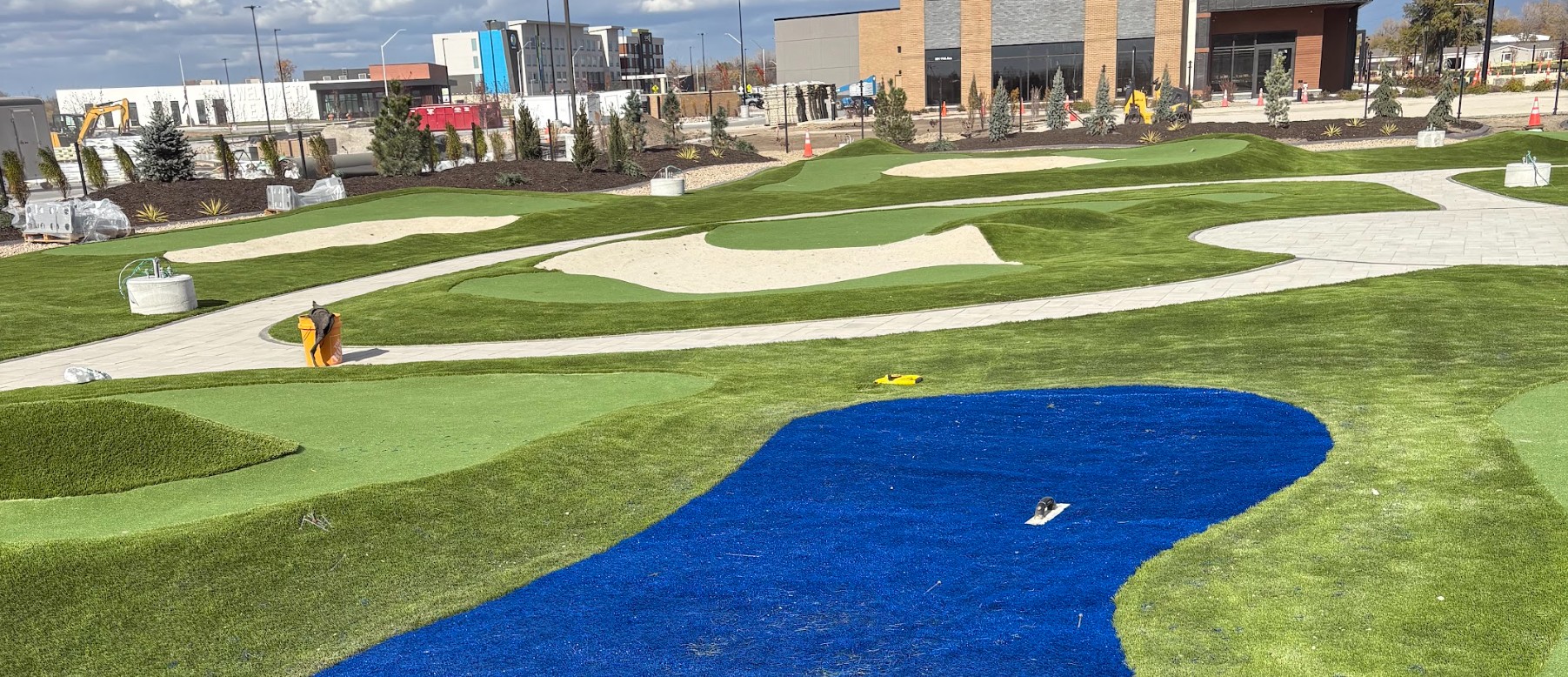
Artificial putting greens in Nebraska are popular for a few different reasons. Golf courses looking to upgrade their practice facilities. Businesses building out outdoor amenity spaces. Homeowners who want a backyard putting green that actually putts like a real course. And entertainment venues creating a fun activity area that looks sharp and holds up to heavy foot traffic.
We design and install custom putting greens across Nebraska, including in Omaha, Lincoln, and surrounding areas. Each green is built with careful attention to the undulation and contours that make putting practice actually useful, not just decorative. A flat synthetic green looks fine but doesn’t prepare you for anything. A properly contoured green gives you real feedback and real improvement.
For golf courses and practice facilities, we build chipping areas and fringe turf alongside the putting surface so the whole short-game area feels cohesive. For residential and commercial projects, we focus on durability and appearance — a green that looks great from day one and still looks great five years later.
Why Nebraska Golfers Love Artificial Putting Greens
Nebraska’s golf season gets cut short every year by weather at both ends. An artificial putting green lets golfers stay sharp longer into the fall and get back to practicing earlier in the spring. And for commercial properties in Omaha or Lincoln, a putting green is a standout feature that gets used constantly — far more than a lot of other outdoor amenities.
Football Fields
Football field installation in Nebraska is a big deal. Friday night lights mean a lot in this state, and the condition of a football field sends a message about a program’s commitment to its athletes. A patchy, beat-up natural grass field doesn’t just look bad — it increases injury risk and limits how much you can use the facility the rest of the week.
We install artificial turf football fields for high schools, middle schools, and multi-use athletic complexes throughout Nebraska. Our football field turf systems are built to handle the full load: daily practices, game nights, and the kind of hard use that comes with a sport played on every inch of the field.
Football turf in Nebraska also needs to perform in cold weather. We select turf systems that stay flexible and consistent even as temperatures drop in late October and November. You won’t get the rock-hard, frozen-surface problems that can show up with some turf products that weren’t designed for Midwest climate swings.
Beyond the game itself, synthetic football fields give Nebraska schools and parks more flexibility. The same field can host band practice, community events, soccer games, and lacrosse without destroying the surface. That kind of multi-use value matters a lot for facilities trying to do more with limited budgets.
Football Field Installation Process
A full football field installation involves site prep and subbase grading, compacted aggregate base, drainage system, and the turf system itself — which includes the backing, fibers, and infill. We work with programs to choose infill types that match their safety requirements and budget, including options that stay cooler in summer and perform consistently in colder weather.
Baseball Fields
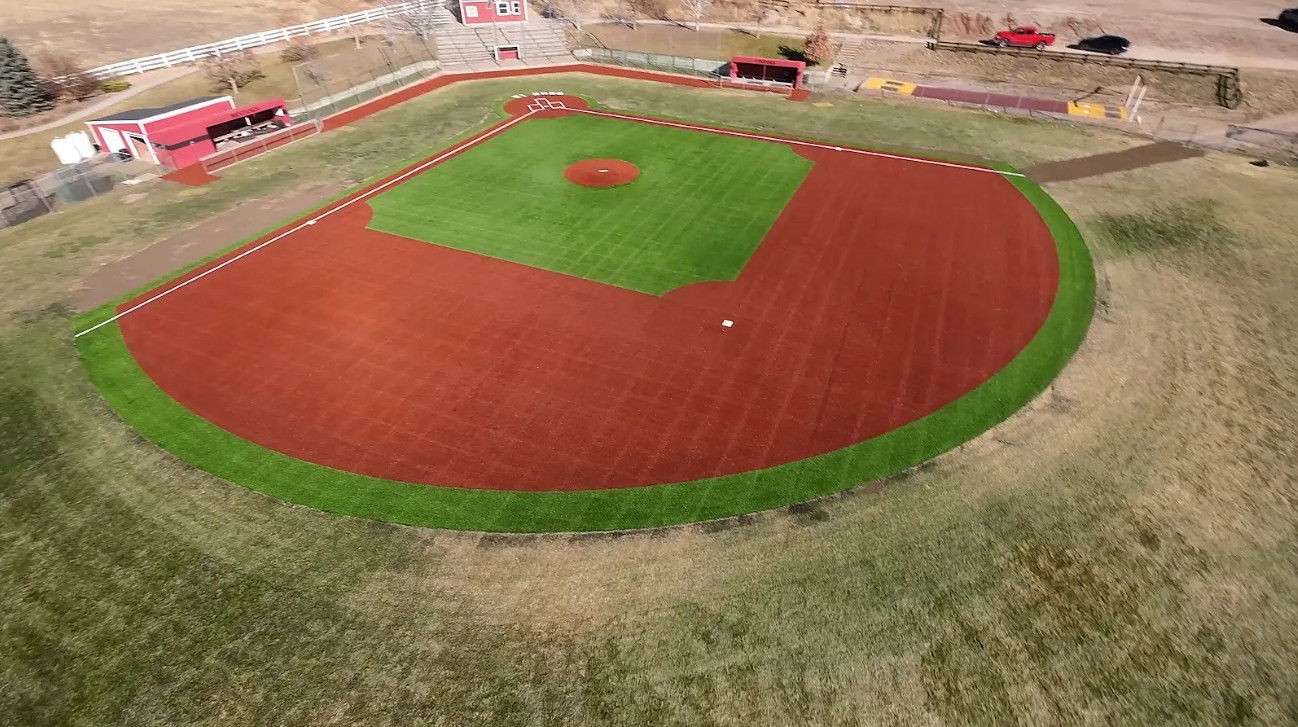
Baseball field installation in Nebraska is one of our most requested services, and it makes a lot of sense when you think about how the sport is played here. Nebraska has a long history of strong baseball programs — from high school ball in small towns to travel leagues and college fields across the state. But grass baseball fields take a beating, especially early in the season when the ground is still saturated from snowmelt and spring rain.
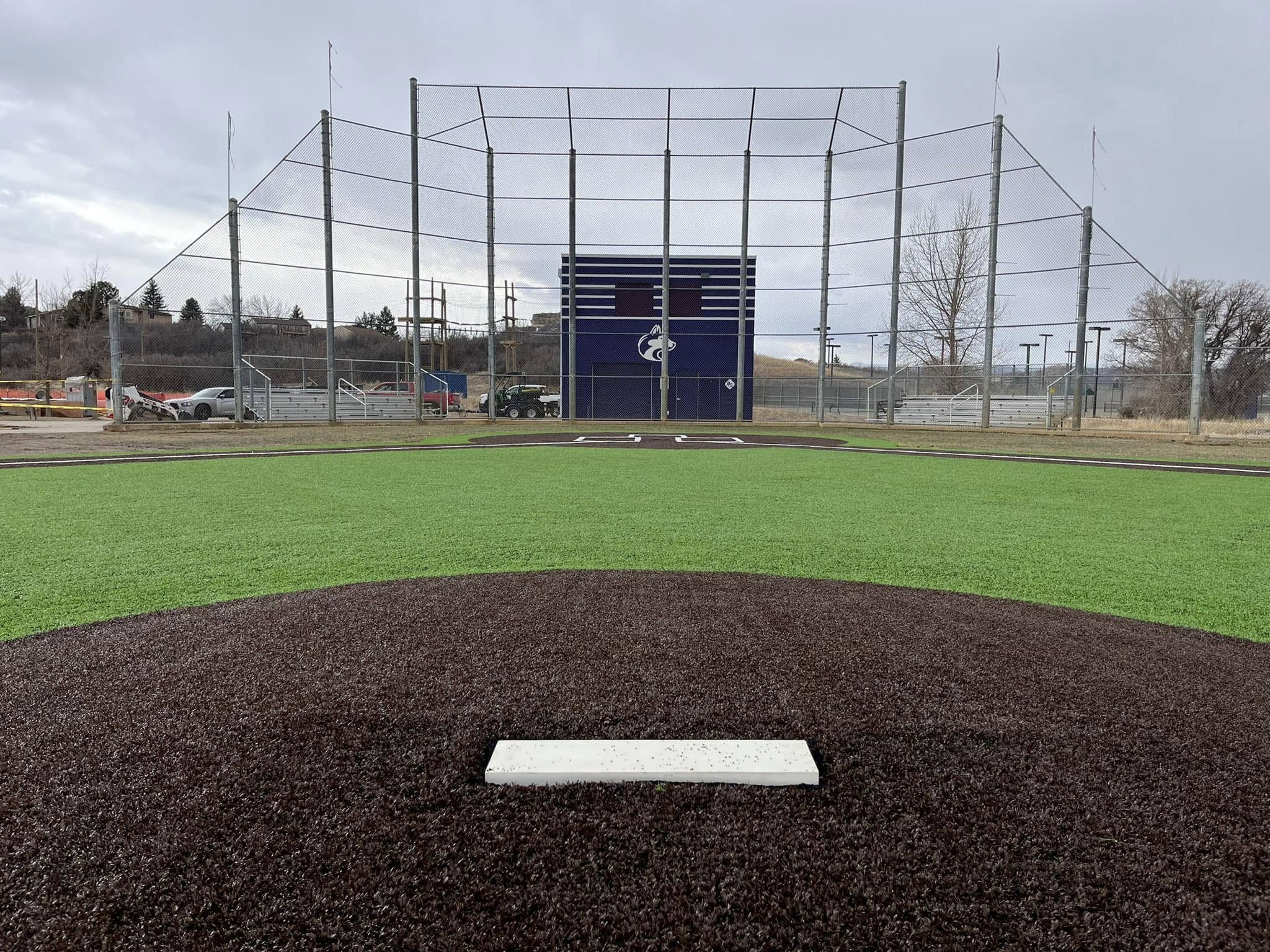
We install synthetic turf on baseball fields of all sizes, including full infield coverage, warning track systems, and outfield turf options. A lot of programs in Nebraska start with just the infield — that’s where the wear is worst, and it’s where wet conditions cause the most cancellations.
Our baseball field turf systems are designed with proper infill and drainage so the field plays true. Ground balls roll consistently. Footing is reliable in the batter’s box and around the bases. And after a heavy Nebraska rainstorm, the field is typically ready to play within an hour instead of days.
We’ve installed baseball fields at schools, municipal parks, and private complexes across Nebraska. If you’re in a community like Columbus, Fremont, Scottsbluff, or Alliance and you’re tired of losing games and practice time to field conditions, a synthetic turf baseball field is worth a serious look.
What’s Included in a Baseball Field Installation
Every baseball field project is a little different, but most installations include base preparation and grading, drainage layer installation, turf system selection based on the field’s use level, and all seams, edges, and anchoring. We also handle the field markings — foul lines, batter’s boxes, and coaching boxes — baked right into the turf so they don’t fade or need repainting.
(308) 380-6588
Get a free estimate today.
Nebraska Weather Is Tough on Natural Grass — But Not on Synthetic Turf
Nebraska weather is genuinely hard to plan around. You can have a 70-degree day in March followed by six inches of snow two days later. Thunderstorms roll through in June and drop an inch of rain in forty minutes. August brings stretches of 95-degree heat that turns grass into straw. Any one of those things can take a natural grass field out of commission for days. All of them together, across a full season, can wreck a field entirely. Synthetic turf handles all of it without skipping a beat. The fibers don’t drown, don’t bake off, and don’t need time to recover. The field just keeps going.
Rain is probably the biggest day-to-day issue for Nebraska sports field managers, and it’s the area where artificial turf makes the most immediate difference. A quality synthetic turf system is built on a compacted aggregate base with a drainage layer underneath the turf backing. When rain hits a synthetic field, the water moves through the turf fibers, through the infill, through the backing perforations, and into the drainage system — typically draining at a rate of 30 to 50 inches per hour or more. Compare that to natural grass sitting on Nebraska clay soil, which can hold water for two or three days after a heavy rain. That difference alone — the ability to play an hour after a rainstorm instead of waiting through the weekend — is reason enough for a lot of Nebraska programs to make the switch.
Heat and cold are the other two extremes that synthetic fields manage better than people expect. In summer, modern turf infill systems — especially crumb rubber blends and newer organic infill options — are engineered to dissipate heat better than older turf generations. Proper irrigation of the surface on extremely hot days also brings temperatures down quickly, much faster than cooling down a sun-baked dirt infield. On the cold end, synthetic turf stays flexible and consistent well into late fall temperatures, which matters for Nebraska football and soccer seasons that run into October and November. The surface doesn’t freeze into a hard, uneven mess the way a wet natural grass field can when temperatures drop overnight. Athletes get a safer, more predictable playing surface even when the weather is working against everyone.
How to Get Started on Your Nebraska Sports Field Project
The best first step is a site visit and conversation about what you need. We’ll look at your existing surface, talk through how the field gets used, and give you an honest assessment of what kind of synthetic turf system makes sense for your situation and your budget.
Sports fields in Nebraska have real, specific challenges — and we’ve been solving them long enough to know what works and what doesn’t. Whether it’s a baseball infield in a small town, a high school football field in a growing suburb of Omaha, or a putting green at a Lincoln golf course, we approach every project the same way: get the base right, pick the right turf system, and install it to last.
If you’re ready to stop losing game time to poor field conditions and start getting more out of your athletic facilities, give us a call or fill out the contact form below. We’re happy to answer questions, walk through options, and put together a quote for your sports field installation project in Nebraska.
Contact us for a free estimate today.
Our number
(308) 380-6588
Our Email
info@progameturfrec.com
Our location
Omaha, Nebraska